 08452 30 40 30




Sustainable Science:
The Crucial Role of Sustainability in Laboratory Research
Sustainability in laboratory research is a critical aspect of modern scientific practice, as researchers strive to minimise their environmental impact and promote responsible resource management. Laboratories are known for their high energy consumption, water usage, and generation of waste, making sustainability initiatives essential for reducing carbon footprints and promoting eco-friendly practices.
One key area of focus in sustainable laboratory research is energy efficiency. Laboratories typically require significant amounts of energy to power equipment, maintain controlled environments, and support experiments. By implementing energy-saving measures such as using energy-efficient appliances, optimising ventilation systems, and incorporating renewable energy sources like solar panels, laboratories can reduce their energy consumption and lower greenhouse gas emissions.

Water conservation is another important consideration in sustainable laboratory research. Laboratories often use large quantities of water for experiments, cleaning, and cooling systems. Implementing water-saving technologies, recycling water where possible, and adopting best practices for water management can help laboratories minimise water waste and protect this precious resource.
Waste reduction and recycling are also key components of sustainable laboratory research. Laboratories generate various types of waste, including hazardous chemicals, biological materials, and disposable plastics. By implementing waste segregation programs, recycling initiatives, and proper disposal protocols, laboratories can minimise their environmental impact and promote a circular economy approach to waste management.
Furthermore, sustainable laboratory research involves promoting green chemistry practices, which focus on designing chemical processes that are environmentally friendly, safe, and efficient. By using greener solvents, reducing the use of toxic chemicals, and optimising reaction conditions, researchers can minimise the environmental impact of their experiments and contribute to a more sustainable future.
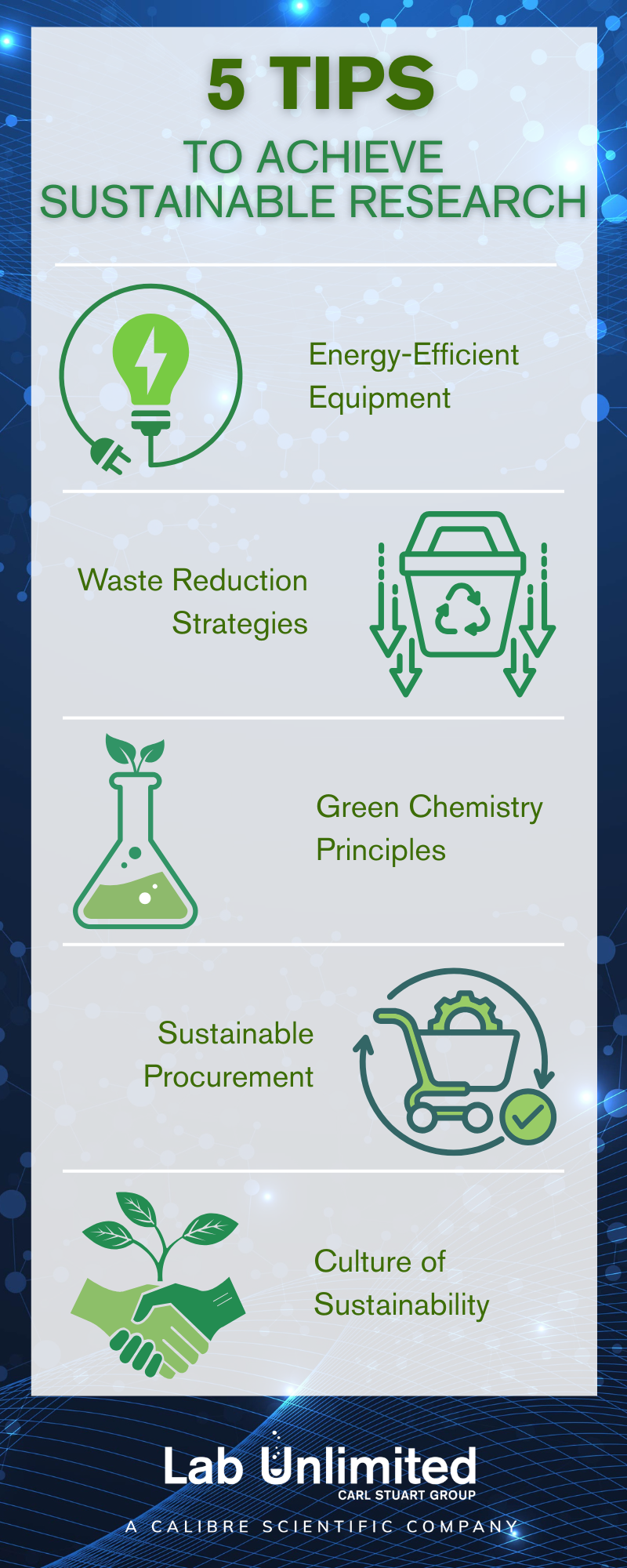
5 tips to achieve sustainable research:
- Opt for Energy-Efficient Equipment: Choose energy-efficient laboratory equipment and appliances to reduce energy consumption and lower carbon emissions.
- Implement Waste Reduction Strategies: Minimise waste generation by practising proper waste segregation, recycling, and reusing materials whenever possible.
- Use Green Chemistry Principles: Embrace green chemistry practices to reduce the use of hazardous chemicals, minimise environmental impact, and promote sustainable research methods.
- Promote Sustainable Procurement: Source lab supplies and materials from eco-friendly suppliers, prioritising sustainability and ethical practices in their production processes.
- Foster a Culture of Sustainability: Educate lab members on the importance of sustainability, encourage eco-friendly behaviours, and implement sustainable practices as part of the research workflow.

Sustainability in laboratory research is a multifaceted endeavour that requires a holistic approach to reducing energy consumption, conserving water, managing waste, and promoting green chemistry practices. By embracing these initiatives, laboratories can reduce their environmental footprint while advancing science responsibly and ethically.
If you're interested in exploring how your lab can take the next step toward sustainability, we invite you to get in touch with us to learn more about our sustainable product offerings and how they can support your goals.
|
To find out more: |